10 hours ago
Thursday, April 07, 2016
New Insights on the Origins of Baseball
An 1857 document (called "Laws of Base Ball") shed important new light on the history of baseball. Among other things, it was definitely not invented in 1960 by Alexander Cartwright. Of course, baseball has an even early U.K. history, and I am not talking about cricket or rounders.
Tuesday, April 05, 2016
"Dynamical Systems on Networks: A Tutorial"
My book, coauthored with James Gleeson, is now officially out. It is called Dynamical Systems on Networks: A Tutorial, and it does just what the title says.
Our book is part of the series Frontiers in Applied Dynamical Systems: Reviews and Tutorials, which at some level makes our monograph somewhere in between a book and an article. Springer is marketing it as a book, so I guess it's a book. You can even find it on Amazon.com and on Amazon.co.uk.
Older versions are available on the arXiv.
Sunday, April 03, 2016
Tales from the ArXiv: "Wrapped Microlocal Sheaves on Pairs of Pants"
Basically, I just like the title of this paper.
(I am also amused by the mathematizations of "higher-dimensional pairs of pants" and "tailored pairs of pants".)
(I am also amused by the mathematizations of "higher-dimensional pairs of pants" and "tailored pairs of pants".)
Saturday, April 02, 2016
Kickin' it Old School: "Where's the Beef?" Board Game
I was at a store with random old geek and gaming stuff, and one of their display cases contained a used copy of the Where's the Beef? board game (which I forgot existed).
There were also things like wax packs of Topps Three's Company collectible cards. (I had seen those before.)
There were also things like wax packs of Topps Three's Company collectible cards. (I had seen those before.)
Friday, April 01, 2016
All About Balls
After reading this IFLS article, I will never again think about avocados or orchids in the same way.
Thursday, March 31, 2016
April Fool's Day Round-Up
Let's start with this new paper on the arXiv. And also this one. Also this one. (Tip of the cap to Guido Caldarelli for the third one.) Also this paper and this one.
Here is something about Brexit from The Guardian. (Tip of the cap to Dominic Vella.)
Here is a collaboration between Mark Zuckerberg and H&M. (Tip of the cap to Ravi Montenegro.)
Google had some issues with its Gmail joke this year.
Meanwhile, according to the New York Times, Stanford University's admissions rate has plummeted to 0%. (Tip of the cap to Carlos Castillo Chavez.) This one is great!
I assume that this CNN.com article about an SUV chase in which the SUV ultimately takes out a fighter jet is a fake.
The country of Estonia is now going to run an OS for other countries. (Tip of the cap to Guillermo Valle Pérez.)
CERN also got into the act with a musical number that missed a perfect rickrolling opportunity. Techers should consider themselves suitably warned, and I got caught offguard by this one.
George Takei posted a prank on his Facebook page about a new sitcom costarring Cloris Leachman and him.
Here is CNN.com's round-up of today's pranks.
National Geographic announced that they would stop publishing nude animal photos. (Tip of the cap to Karen Kustedjo.)
Also, the New York Times crossword puzzles are ending.
And then there is the video advertisement for all-new Quilted Northern "Rustic Weave" toilet paper, which is hilarious. (Tip of the cap to Aaron Clements.)
Ready Player One
I just finished reading Ready Player One (which several people told me to read during the past few years, given the prominent role that 80s pop and gaming culture play in the game).
It was fun, I spent some quality time geeking out, and the book stands out very well on its own as a novel (which is crucial, because allusions by themselves can't fully carry a novel). The 80s pop and gaming culture did help, though!
Columbus, Ohio plays an important role in the book, and I just so happened (without planning it) to read almost all of the book while in Columbus.
(By the way, just about all of the musical references were too mainstream, and the author messed up the lyrics from the Howard Jones song.)
New Video Game: "Guess the Correlation"
You can literally play the video game Guess the Correlation!
I hope it has some good Easter Eggs!
(Tip of the cap to Physics Today.)
I hope it has some good Easter Eggs!
(Tip of the cap to Physics Today.)
Monday, March 28, 2016
Thursday, March 24, 2016
"The Curious Incident of the Dog in the Night-Time with a Chainsaw"
Sometimes, this is what happens when you go with a meme. Here is a link to the Wikipedia entry for the book I just read. At the recommendation of several people, I am now reading Ready Player One.
(Tip of the cap to Keith Fraser for the meme.)
(Tip of the cap to Keith Fraser for the meme.)
Wednesday, March 23, 2016
From The Onion Archive: "Georgia Adds Swastika, Middle Finger To State Flag"
Once again, The Onion is brilliant, as this article (technically just a headline and a picture) from 1998 demonstrates.
Monday, March 21, 2016
Your Own Personal Peer-Reviewed-Journal
One living philosopher has a peer-reviewed journal dedicated to himself!
It would be hilarious if one of his own papers were rejected by the journal.
(At least it's open-access.)
It would be hilarious if one of his own papers were rejected by the journal.
(At least it's open-access.)
Saturday, March 19, 2016
What Happens in Columbus Stays in Columbus (2016 Edition)
I had heading to Columbus, OH to be in residence at the Mathematical Biosciences Institute (MBI) at The Ohio State University for the next month as part of a semester-long emphasis program on dynamics of biologically-inspired networks that I helped organize. I also co-organized workshop 3 (on generalized network structures and dynamics) and will participate in workshops 3 and 4 (on control and observability of network dynamics).
You can request a live stream of these workshops!
You can request a live stream of these workshops!
Friday, March 18, 2016
Complex Systems Tarot Cards!
Peter Dodds have produced some seriously awesome complex systems tarot cards!
(Tip of the cap to YY Ahn.)
(Tip of the cap to YY Ahn.)
Science Kombat
Two words: Finish him!
Based on what I see from the graphics, so far I think Stephen Hawking is the best playable character.
(Tip of the cap to Joshua Bodyfelt.)
Based on what I see from the graphics, so far I think Stephen Hawking is the best playable character.
(Tip of the cap to Joshua Bodyfelt.)
Thursday, March 17, 2016
Euler's Identity and Measurements of Profundity
I am going to use this SMBC when people bring up whether somebody's mathematics is deep or not.
Wednesday, March 16, 2016
A Physics Circus
Walking back to the hotel from dinner, I noticed a bunch of vans from Ringling Bros. and Barnum & Bailey Circus. So now we're going to have the physicists and a literal circus present at the same location in space-time. Six years ago, we had a coincidence of the American Physical Society March Meeting and a young cheeleaders conference. (Each group was completely perplexed by the other.)
Regardless of how things pan out, I am sure that hilarity will ensue.
Regardless of how things pan out, I am sure that hilarity will ensue.
The Greek God of Not Swinging
During his career, Kevin Youkilis (aka "The Greek God of Walks") saw 292 career pitches on a 3-0 count... and swung 0 times.
Tuesday, March 15, 2016
March Meeting Chatchkes
I was pretty selective about chatchkes, but here is the stuff I have gotten so far –– most of them are appropriately GSNP-themed. GSNP is the Group on Statistical and Nonlinear Physics, which is my main home in this community. (I did get roped into signing up for the Soft Matter group, and then I was given appropriately granular mints.)
The rattleback was my reward for the Plinko game. It was what I wanted; there were multiple possible chatchkes that one could get, but the game was less random than a good Plinko construction would have been.
The coolest chatchke by far is the hot-pack/cold-pack, which is also appropriately granular (and which I think can be appropriated for many other uses in addition to the intended ones).

By the way: I plan to use everything in this picture, with the possible exception of the brain.
At registration, everybody received a keychain with a small bottle of antibacterial hand sanitizer (because of the scientific reputation for hygiene).
Andrew Wiles Wins 2016 Abel Prize
The home team won big today: my Mathematical Institute colleague Andrew Wiles has won the 2016 Abel Prize!
Monday, March 14, 2016
Sunday, March 13, 2016
What Happens at the March Meeting Stays at the March Meeting (2016 Edition)
I am heading to Baltimore to go to the 2016 APS March Meeting along with 10000 or so of my best friends. I haven't been to this conference since 2010.
Tomorrow I'll be giving an invited talk on localized modes in granular crystals, and on Wednesday I'll be chairing one of the networks sessions.
Update (3/17/16): You can now download the slides of my talk, which is about one-dimensional granular crystals.
Tomorrow I'll be giving an invited talk on localized modes in granular crystals, and on Wednesday I'll be chairing one of the networks sessions.
Update (3/17/16): You can now download the slides of my talk, which is about one-dimensional granular crystals.
Friday, March 11, 2016
The "Most Interesting Man in the World" Raises his Glass for the Last Time
The "Most Interesting Man in the World" has raised his glass for the last time, as the character was sent on a one-way trip to Mars in his final commercial. So ends one of the greatest ad campaigns in history. (It launched an internet meme, for example.)
(Tip of the cap to Kin Chan.)
(Tip of the cap to Kin Chan.)
Wednesday, March 09, 2016
Somerville Mathematics Undergraduates Taking Leadership Roles
Yes, yes they are. And it's especially excellent that they're taking leadership roles on the crucial issue of gender equity in mathematics. Way to go!
Monday, March 07, 2016
A Cartoony Geek Alphabet
This geek alphabet is awesome. Take a look at "I", for example.
(Tip of the cap to whoever posts for Bring Back Firefly on Facebook.)
(Tip of the cap to whoever posts for Bring Back Firefly on Facebook.)
Sunday, March 06, 2016
Saturday, March 05, 2016
What Happens in Regensburg Stays in Regensburg
I am off the Regensburg for the Spring Meeting of the German Physical Society.
Thursday, March 03, 2016
A New Low for PLOS ONE
Well, this paper in PLOS ONE demonstrates in epic fashion that this journal is a predatory journal.
Quoting the paper's abstract: The explicit functional link indicates that the biomechanical characteristic of tendinous connective architecture between muscles and articulations is the proper design by the Creator to perform a multitude of daily tasks in a comfortable way.
This kind of statement should not be allowed in a scientific paper.
(Tip of the cap to Sang Hoon Lee.)
Update: This paper has also been discussed in Easter Eggs in Scientific Papers.
Update (3/05/16): Oh look, PLOS ONE continues to be careful about how they go about doing things.
Update (3/07/16): Here is Aaron Clauset's take on more general situations in publishing, with the recent PLOS ONE debacle as the backdrop for these larger issues. (My view of the journal is considerably less generous than his, perhaps because they have been failing epically with mathematics ever since their inception.)
Monday, February 29, 2016
Saturday, February 27, 2016
What Happens in Marina del Rey Stays in Marina del Rey
I am off to Marina del Rey for a wedding!
It's always nice on my body to go to California for the weekend and then return.
It's always nice on my body to go to California for the weekend and then return.
Friday, February 19, 2016
"Lost in Transportation: Information Measures and Cognitive Limits in Multilayer Navigation"
A new article of mine just came out in final form today in Science Advances. Here are the details.
Title: Lost in Transportation: Information Measures and Cognitive Limits in Multilayer Navigation
Authors: Riccardo Gallotti, Mason A. Porter, and Marc Barthelemy
Abstract: Cities and their transportation systems become increasingly complex and multimodal as they grow, and it is natural to wonder whether it is possible to quantitatively characterize our difficulty navigating in them and whether such navigation exceeds our cognitive limits. A transition between different search strategies for navigating in metropolitan maps has been observed for large, complex metropolitan networks. This evidence suggests the existence of a limit associated with cognitive overload and caused by a large amount of information that needs to be processed. In this light, we analyzed the world’s 15 largest metropolitan networks and estimated the information limit for determining a trip in a transportation system to be on the order of 8 bits. Similar to the "Dunbar number," which represents a limit to the size of an individual’s friendship circle, our cognitive limit suggests that maps should not consist of more than 250 connection points to be easily readable. We also show that including connections with other transportation modes dramatically increases the information needed to navigate in multilayer transportation networks. In large cities such as New York, Paris, and Tokyo, more than 80% of the trips are above the 8-bit limit. Multimodal transportation systems in large cities have thus already exceeded human cognitive limits and, consequently, the traditional view of navigation in cities has to be revised substantially.
Wednesday, February 17, 2016
Comparing Novels Based Only on Punctuation
Can one algorithmically discern writing styles in novels based only on punctuation (no words)?
Take a look at this discussion.
I want to see someone compare the writing styles of different scientists in this way. :)
(Tip of the hat to Santa Fe Institute.)
Update (3/19/16): Here is my article on this for the Improbable Research blog.
Take a look at this discussion.
I want to see someone compare the writing styles of different scientists in this way. :)
(Tip of the hat to Santa Fe Institute.)
Update (3/19/16): Here is my article on this for the Improbable Research blog.
Tuesday, February 16, 2016
RIP Sir Christopher Zeeman (1925–2016)
Mathematician Sir Christopher Zeeman, a pioneer in dynamical systems (e.g., he is very famous for his work on catastrophe theory), died this weekend.
(Tip of the cap to Gail Cardew.)
(Tip of the cap to Gail Cardew.)
Monday, February 15, 2016
A Temperature Scale with a Negative Slope
Yes, really. The Delisle (°D) temperature scale has a negative slope. (The original version of the Celsius scale did as well.) Check out Wikipedia's comparison of temperature scales.
I just tweeted about it.
I started going down the rabbit hole earlier today because of today's XKCD.
I just tweeted about it.
Delisle (°D): because we like temperature scales with a negative slope (cue Tom Jones): https://t.co/znCcYoJR0s pic.twitter.com/m5M5nmnyZa
— Mason Porter (@masonporter) February 15, 2016
I started going down the rabbit hole earlier today because of today's XKCD.
Quantum Chess
I am a bit late to the game in watching the video of Quantum Chess. Go and watch it!
(It is excellent! Not bogus.)
(It is excellent! Not bogus.)
Saturday, February 13, 2016
National Videogame Museum to Open in April
I want to take a field trip to the new U.S. National Videogame Museum, which will open in Frisco, Texas in April.
Even more than that, I want to go to the classic arcade and American Classic Arcade Museum at Funspot in New Hampshire.
(Tip of the cap to Paul Carter for news about the new museum.)
Even more than that, I want to go to the classic arcade and American Classic Arcade Museum at Funspot in New Hampshire.
(Tip of the cap to Paul Carter for news about the new museum.)
Friday, February 12, 2016
"Superdiffusive Transport and Energy Localization in Disordered Granular Crystals"
A new paper of mine just came out in final form today. Here are the details. (Also see a paper by others published as a consecutive article with ours. Scientifically, it's really good that these articles have appeared as back-to-back papers.)
Title: Superdiffusive Transport and Energy Localization in Disordered Granular Crystals
Authors: Alejandro J. Martínez, P. G. Kevrekidis, and Mason A. Porter
Abstract: We study the spreading of initially localized excitations in one-dimensional disordered granular crystals. We thereby investigate localization phenomena in strongly nonlinear systems, which we demonstrate to differ fundamentally from localization in linear and weakly nonlinear systems. We conduct a thorough comparison of wave dynamics in chains with three different types of disorder—an uncorrelated (Anderson-like) disorder and two types of correlated disorders (which are produced by random dimer arrangements)—and for two types of initial conditions (displacement excitations and velocity excitations). We find for strongly precompressed (i.e., weakly nonlinear) chains that the dynamics depend strongly on the type of initial condition. In particular, for displacement excitations, the long-time asymptotic behavior of the second moment ˜m2 of the energy has oscillations that depend on the type of disorder, with a complex trend that differs markedly from a power law and
which is particularly evident for an Anderson-like disorder. By contrast, for velocity excitations, we find that a standard scaling m_2 ∼ t^γ (for some constant γ) applies for all three types of disorder. For weakly precompressed (i.e., strongly nonlinear) chains, m_2 and the inverse participation ratio P^{−1} satisfy scaling relations m_2 ∼ t^γ and P^{−1} ∼ t^{−η}, and the dynamics is superdiffusive for all of the cases that we consider. Additionally, when precompression is strong, the inverse participation ratio decreases slowly (with η < 0.1) for all three types of disorder, and the dynamics leads to a partial localization around the core and the leading edge of a propagating wave packet. For an Anderson-like disorder, displacement perturbations lead to localization of energy primarily in the core, and velocity perturbations cause the energy to be divided between the core and the leading edge. This localization phenomenon does not occur in the sonic-vacuum regime, which yields the surprising result that the energy is no longer contained in strongly nonlinear waves but instead is spread across many sites. In this regime, the exponents are very similar (roughly γ ≈ 1.7 and η ≈ 1) for all three types of disorder and for both types of initial conditions.
Thursday, February 11, 2016
Gravitational Waves have been Observed Directly
You can read about it here.
And thanks to Aaron Clauset and YY Ahn for posting an explanation from PhD Comics for how gravitational waves work (and the approach used in LIGO to observe them directly for the first time).
Here is a link to the CNN.com's article reporting the discovery.
And thanks to Aaron Clauset and YY Ahn for posting an explanation from PhD Comics for how gravitational waves work (and the approach used in LIGO to observe them directly for the first time).
Here is a link to the CNN.com's article reporting the discovery.
40th Birthday
Yesterday I turned 40. It happens to everybody (unless they die at a younger age, of course).
My research group banded together to give me a birthday present at Networks Journal Club today!
First, we have a multilayer network of (most) current members and several former members of my group. In fact, it is an induced subgraph, with me as the ego node. (If you take a look, it seems like one should ponder a bit about how to define an induced subgraph in a multilayer context.) The layers are defined by membership in Somerville College, coauthorship of papers, and Facebook friendship. (There are no interlayer edges, so technically this is an edge-colored multigraph.) Today’s talk included some calculations on this network.
Second, they bought me a plush ankylosaurus (aka: best dinosaur ever!), and some of my students noticed that that was the type of plush dinosaur I really wanted to get as a child but never actually saw in a store.

Wednesday, February 10, 2016
Mary Somerville to Appear on Scottish £10 Note!
Mary Somerville will appear on a new £10 note from the Royal Bank of Scotland. Excellent!
(Tip of the cap to Alice Prochaska.)
(Tip of the cap to Alice Prochaska.)
Networks and Physics Subject Classifications
The American Physical Society has a revealed a new physics subject classification (called "Physics Subject Headings" and "PhySH" as a shorthand), and "networks" is listed as a primary category in the top level of classification. The study of networks has come a long way in terms of how it's perceived! Networks is indeed physics.
(Tip of the cap to Sang Hoon Lee.)
(Tip of the cap to Sang Hoon Lee.)
Monday, February 08, 2016
Jenga Experiment in Physical Review Letters
Take a look at this paper about Jenga in Physical Review Letters. OK, it's not literally about Jenga, but there is a figure in the paper that makes me think of Jenga, and the authors are discussing drilling holes to collapse a wooden cube. The paper is called "Critical Fragmentation Properties of Random Drilling: How Many Holes Need to Be Drilled to Collapse a Wooden Cube?"
This Random Walk is Not One of the Usual Suspects
The random walk in the paper "The Spacey Random Walk: a Stochastic Process for Higher-order Data" is not one of the usual suspects.
Sunday, February 07, 2016
What Happens in Newcastle Stays in Newcastle (2016 Edition)
I just got back from spending a couple days in Newcastle with friends. And now back to "reality" in Oxford.
Friday, February 05, 2016
Which Equation is the Most Beautiful?
They survey N mathematicians and physicists, and asked them to state which equation they think is the most beautiful.
Survey says?
(P.S. I wish this were a real question on Family Feud.)
Survey says?
(P.S. I wish this were a real question on Family Feud.)
Wednesday, February 03, 2016
News Flash: "Former White Sox Prospect Breaks into Pittsburgh Office, Eats Pizza, Falls Asleep"
Um, OK.
According to the CEO of the company whose office the prospect broke into, "The fridge was filled with leftover pizza, and he came in and just dumped a whole bunch of stuff out, dumped pizza out, and there’s trails of pizza leading to the backroom.”
It's too bad that he's a human and not a ninja turtle.
Congratulations to Dr. Marya Bazzi and Dr. Lucas Jeub!
I can now officially congratulate my doctoral students Dr. Marya Bazzi and Dr. Lucas Jeub, who passed their thesis defenses last month and who received 'leave to supplicate' yesterday. It is the latter bureaucratic condition that implies that everything is now done.
Both Marya (who is jointly supervised with Sam Howison) and Lucas work on problems in community detection. Marya has developed methods for the study of multilayer community detection, especially in multilayer representations of temporal networks. Her first paper, which is a methods paper but uses data from finance to help illustrate her findings, just came out in final form. Lucas's first paper, on a local method for community detection, was published early last year. His second paper, which applies these ideas to multilayer networks, is on the arXiv. In his thesis, Lucas also studied hair-product data from Unilever.
Lucas and Marya are finishing up follow-up work, including a paper that they are coauthoring. Stay tuned.
Tuesday, February 02, 2016
"Heterogeneous, Weakly Coupled Map Lattices"
A new paper of mine just came out in final form today (though the typesetters were supposed to send us another set of page proofs, and sure enough issues that we pointed out with references leading to dead links in the references still have not been fixed completely). In any event, while we attempt to get them to correct their mistakes, here are some details about the article.
Title: Heterogeneous, Weakly Coupled Map Lattices
Authors: Ma Dolores Sotelo Herrera, Jesús San Martín, and Mason A. Porter
Abstract: Coupled map lattices (CMLs) are often used to study emergent phenomena in nature. It is typically assumed (unrealistically) that each component is described by the same map, and it is important to relax this assumption. In this paper, we characterize periodic orbits and the laminar regime of type-I intermittency in heterogeneous weakly coupled map lattices (HWCMLs). We show that the period of a cycle in an HWCML is preserved for arbitrarily small coupling strengths even when an associated uncoupled oscillator would experience a period-doubling cascade. Our results characterize periodic orbits both near and far from saddle–node bifurcations, and we thereby provide a key step for examining the bifurcation structure of heterogeneous CMLs.
"Mistakes Reviewers Make"
Here is a useful article about mistakes reviewers make and things to think about when one writes a referee report on a paper. It's good for both junior and senior people, and reminders even for senior people (myself very much included) is definitely a good thing. (It's views on how much one should stress the details versus the big picture of a paper do, however, appear to be different from mine. I didn't look at that part carefully but focused on the headline points rather than on the details therein --- possibly ironically.)
(Tip of the cap to Vinko Zlatić and Bruno Gonçalves.)
(Tip of the cap to Vinko Zlatić and Bruno Gonçalves.)
Monday, February 01, 2016
Sunday, January 31, 2016
My Coffee (and Chicory) Essence
It's my essence! Mine! Mine!
Naturally, it expels the old method as if it were a delinquent student.
(Tip of the cap to David Fallon.)
Naturally, it expels the old method as if it were a delinquent student.
(Tip of the cap to David Fallon.)
Tuesday, January 26, 2016
Oh, Britain –– For Shame
Really, Great Britain? For shame. (And for fuck's sake.)
I could go on a long rant, but I would only expend energy and fumes. I wish I could at least say that I am surprised, but I'm not. Foreigners are made to feel very unwelcome here (and both my students and I have experienced it often), and it was only a matter of time before something like this happened.
For shame.
Update (2/22/16): And here is another horror story. (Tip of the cap to Yves van Gennip.)
Quote of the Day: Hashtag Edition
Today's SMBC has a priceless quote: "There can be no quarter when facing the hoary countenance of evil. I must select my hashtag with care."
(The rest of today's comic strip is meh.)
(The rest of today's comic strip is meh.)
Sunday, January 24, 2016
The Acoustics of Breaking Chopsticks
In my latest post for the Improbable Research blog, I discuss the acoustics of breaking chopsticks.
Saturday, January 23, 2016
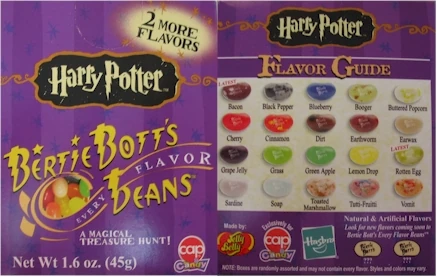
Every Flavor Except for a Set of Measure Zero?
I saw these Harry-Potter-inspired jelly beans at a market many years ago, and I was struck by "Every Flavor Beans" now coming with two more flavors. Perhaps they mean every flavor except for a set of measure zero?
Friday, January 22, 2016
The Most Googled Job in Each State
Here is a visualization of some jobs that each U.S. state led in Google searches. Some of these are fantastic.
(Tip of the cap to Kin Chan.)
(Tip of the cap to Kin Chan.)
Thursday, January 21, 2016
Website: "Sweatpants and Coffee"
I just encountered the website Sweatpants and Coffee from a link in Jennifer Nicoll Victor's Facebook post.
The only reason I am blogging about this is because the site's title is particularly apt for me.
The only reason I am blogging about this is because the site's title is particularly apt for me.
Visualization: California for Beginners
This visualization provides a good summary of California for beginners.
(Tip of the cap to Maria King.)
(Tip of the cap to Maria King.)
Wednesday, January 20, 2016
RIP Animal (1950–2016)
With rock legend David Bowie and other prominent rockers (like Glenn Frey, who was a founding member of the Eagles, and several others) dying in their late 60s (or sometimes early 70s) the last couple of weeks, January 2016 really feels like "The Month the Music Died" (especially with rock music), this article about Animal dying at age 66 is a parody that somebody had to write.
For music, this has been a really awful month...
(Tip of the cap to Chris Howland.)
For music, this has been a really awful month...
(Tip of the cap to Chris Howland.)
Ancient Egyptian d20
Apparently, Ancient Egyptians made small model icosohedrons (i.e., d20s, for those with a role-playing game bent).
One day, I hope that somebody unearths a character sheet, written in hieroglyphics, that was buried with an ancient Egyptian royal.
(Tip of the cap to Steven Wilson.)
One day, I hope that somebody unearths a character sheet, written in hieroglyphics, that was buried with an ancient Egyptian royal.
(Tip of the cap to Steven Wilson.)
Sunday, January 17, 2016
Freeway Knot Theory
Some help from knot theorists would be appreciated. Here is a photoshopped picture of a freeway (based on a real one in Oakland, California) that needs to be untangled.
(Tip of the cap to Stanley Somers.)
Note: The original version of my post described the picture incorrectly as being an actual freeway. See this link. Also, this freeway is knotted up even more severely. :)
(Tip of the cap to Stanley Somers.)
Note: The original version of my post described the picture incorrectly as being an actual freeway. See this link. Also, this freeway is knotted up even more severely. :)
Getting the Last Word
Sometimes, to get the last word, you have to put it on the epitaph of your tombstone.
I have seen a few of these before. Several of them are glorious.
(Tip of the cap to George Takei.)
I have seen a few of these before. Several of them are glorious.
(Tip of the cap to George Takei.)
Subtly Messing with People
I am highly amused by these 20 ways of subtly messing with people (though some of them are not very nice at all).
(Tip of the cap to George Takei.)
(Tip of the cap to George Takei.)
Saturday, January 16, 2016
Nine Simples Rules for The Roadrunner and Wile E. Coyote
Here they are.
Despite one of the rules listed on that site, there was occasionally a bit of other dialog, especially on written signs.
(Tip of the cap to George Takei.)
Despite one of the rules listed on that site, there was occasionally a bit of other dialog, especially on written signs.
(Tip of the cap to George Takei.)
Friday, January 15, 2016
Wednesday, January 13, 2016
What Happens in Brussels Stays in Brussels
I am now off to Brussels for the final grant review meeting for the PLEXMATH consortium.
Tuesday, January 12, 2016
Monday, January 11, 2016
"Community Detection in Temporal Multilayer Networks, with an Application to Correlation Networks"
One of my papers was just published in final form a few days ago. As the title indicates, this paper concerns community detection in temporal multilayer networks. Here are the title, authors, and abstract.
Title: Community Detection in Temporal Multilayer Networks, with an Application to Correlation Networks
Authors: Marya Bazzi, Mason A. Porter, Stacy Williams , Mark McDonald, Daniel J. Fenn, and Sam D. Howison
Abstract: Abstract. Networks are a convenient way to represent complex systems of interacting entities. Many networks contain “communities” of nodes that are more densely connected to each other than to nodes in the rest of the network. In this paper, we investigate the detection of communities in temporal networks represented as multilayer networks. As a focal example, we study time-dependent financial-asset correlation networks. We first argue that the use of the "modularity" quality function –– which is defined by comparing edge weights in an observed network to expected edge weights in a "null network" –– is application-dependent. We differentiate between "null networks" and "null models" in our discussion of modularity maximization, and we highlight that the same null network can correspond to different null models. We then investigate a multilayer modularity-maximization problem to identify communities in temporal networks. Our multilayer analysis depends only on the form of the maximization problem and not on the specific quality function that one chooses. We introduce a diagnostic to measure persistence of community structure in a multilayer network partition. We prove several results that describe how the multilayer maximization problem measures a trade-off between static community structure within layers and larger values of persistence across layers. We also discuss some computational issues that the popular "Louvain" heuristic faces with temporal multilayer networks and suggest ways to mitigate them.
Sunday, January 10, 2016
RIP David Bowie (1947–2016)
Today, we lost a music legend: David Bowie has died of cancer. His last album was released three days ago (last Friday, on his 69th birthday).
There are numerous excellent David Bowie songs --- so much good (and very innovative) music! RIP.
Update: There is more detail in the BBC obituary. Here is the CNN obituary.
Update: As discussed in this article in The Telegraph, the timing of the release of David Bowie's final album last Friday was as a 'parting gift' to his fans. And the video for "Blackstar", which completes the saga both of Major Tom and of David Bowie, is chilling (especially in the context that it has turned out to have).
Update (1/12/16): Also look at these final pictures of David Bowie from last Friday. Amazing!
Update (1/12/16): I should have mentioned the following for those of you who don't already know: In addition to my really liking quite a lot of David Bowie's songs, Bowie exerted a major influence on so many of my favorite artists. The music to which I listen every day, and which gives me a great deal of pleasure, owes a Hell of a lot to David Bowie.
Update (1/13/16): Also see this small collection of tributes. Also don't forget this video (which was first posted in 2013, though is appropriate now more than ever).
Update (1/16/16): Here is visualization of many prominent musical artists and others who were influenced by David Bowie. (Tip of the cap to Duran Duran's post on Facebook.)
Saturday, January 09, 2016
What Happens in Wroclaw Stays in Wroclaw (2016 Edition)
Tomorrow, I'll be flying to Network Science X 2016. I'll be giving one of the invited talks.
Apparently, there is going to be some free ice skating at the conference venue. This deserves a Mel-Brooksian "SEE NetSci on Ice!"
Also, this leads to the obvious hashtag #NetSciOnIce , which isn't cool yet but hopefully will be.
Apparently, there is going to be some free ice skating at the conference venue. This deserves a Mel-Brooksian "SEE NetSci on Ice!"
Also, this leads to the obvious hashtag #NetSciOnIce , which isn't cool yet but hopefully will be.
The Impressive Strength of Interleaved Phonebooks
My latest entry for the Improbable Research blog concerns the impressive strength of interleaved phonebooks.
I managed to miss the blog entry about this that appeared in August. Oops! But at least I coined the phrase "Hercules number".
I managed to miss the blog entry about this that appeared in August. Oops! But at least I coined the phrase "Hercules number".
Eastman–Kodak and the 13-Month Calendar
Yes, really. So cool!
(Tip of the cap to Karen Kustedjo.)
Update (1/23/16): I wrote about the 13-month calendar for the Improbable Research blog.
(Tip of the cap to Karen Kustedjo.)
Update (1/23/16): I wrote about the 13-month calendar for the Improbable Research blog.
Friday, January 08, 2016
Choreographic Crystals!
Theorists have formulated a new kind of crystal that they have dubbed "choreographic crystals". Very cool!
Thursday, January 07, 2016
Dodgers Signing of Pitcher Kenta Maeda is Now Official
The Dodgers have now officially signed pitcher Kenta Maeda to an 8-year deal.
(After counting two too many chickens with certain prior pitching "acquisitions", which both fell apart, I waited to post this blog entry until the deal with Maeda became official.)
(After counting two too many chickens with certain prior pitching "acquisitions", which both fell apart, I waited to post this blog entry until the deal with Maeda became official.)
Curative Properties of Chicken Soup?
This article --- and, especially, its opening picture --- makes me want to have some chicken soup.
(Tip of the cap to I Fucking Love Science.)
(Tip of the cap to I Fucking Love Science.)
New Baseball Hall of Famers
Baseball's new Hall of Famers were announced last night: first-time candidate Ken Griffey Jr. was voted in with the highest percentage ever (99.3%, with 437 of 440 possible votes), and Mike Pizza was elected in his 4th year of eligibility.
Naturally, Piazza should have already been voted in 3 years ago, but such is life. (Other luminaries --- such as Carlton Fisk, Yogi Berra, and many others, also had to wait --- so it's not like that is new, though the back-acne McCarthyist steroid allegations are a different reason than in the past.) Jeff Bagwell, Tim Raines, Mike Mussina, and Curt Schilling made significant gains. Bagwell got over 70% of the vote and Raines got 69.8%, so I expect that they will both finally be elected next year. It's long past time. Trevor Hoffman also debuted on the ballot this year, and his 67.3% of the vote makes it very likely that he'll get elected in the next couple of years. (There is a good chance for next year, but I am not so sure.) Edgar Martinez made especially large gains, reaching a voting percentage of 43.4%, but he's running out of time. Then we have Roger Clemens and Barry Bonds...
Alan Trammell surpassed 40% of the vote in his last year on the ballot. It was also Mark McGwire's last year on the ballot. Unfortunately, Jim Edmonds didn't get the 5% of the vote needed to stay on the ballot next year; this is a shame, as he deserves a lot more consideration for the Hall than he got.
David Schoenfield discussed the winners and losers in this year's ballot.
Griffey is the first #1 overall draft pick to enter the Hall of Fame. By contrast, Piazza (1,390th pick, 62nd round, 1998) is the lowest ever draft pick to make the Hall. Griffey will presumably be enshrined as a Mariner, and Maybe Piazza will enter the Hall as a Marlin? ;) (I hope it will be the Dodgers, but I suspect it may well end up being the Mets.)
You can take a look at the Hall of Fame vote tracker to see many more details on the voting.
This page details newcomers who are eligible for the Hall of Fame ballot starting in 2017. Notable ballot debuts in 2017 include Vladimir Guerrero, Jorge Posada, Manny Ramirez, and Ivan Rodriguez. Of those, Rodriguez has the best chance of making it next year. No major new pitchers debut on the ballot until 2019, so that gives Mussina and Schilling a got chance to make additional major gains by then. Both of them are massively overqualified for the Hall of Fame.
Sunday, January 03, 2016
Error Message in the Sky
Well, it's not quite a wheel in the sky, but this error message in the sky is awesome!
(Tip of the cap to Guillermo Valle Pérez.)
(Tip of the cap to Guillermo Valle Pérez.)
Ars Technica: "The Best New Board Games We Played in 2015"
Ars Technica has posted an article about their favorite new board games they played in 2015.
I am posting this for a specific reason: take a look at the designers of the game Roll for the Galaxy by Rio Grande Games! It's Caltech's very own Wei-Hwa Huang (from my era). Very cool!
(Tip of the cap to Nevin Liber.)
I am posting this for a specific reason: take a look at the designers of the game Roll for the Galaxy by Rio Grande Games! It's Caltech's very own Wei-Hwa Huang (from my era). Very cool!
(Tip of the cap to Nevin Liber.)
Wednesday, December 30, 2015
Dodgers Sign Free-Agent Pitcher
This time, it's for real: we have signed –– past tense! –– free agent pitcher Scott Kazmir to a three-year contract.
Tuesday, December 29, 2015
Awesome Embroidered Temari Spheres
These embroidered temari spheres are awesome!
(Tip of the cap to Association for Women in Mathematics.)
(Tip of the cap to Association for Women in Mathematics.)
Awesome Visual Illusion
This visual illusion is really cool!
Note: I originally referred to this illusion as an "optical illusion", but my friend Steve Van Hooser, a visual neuroscientist, has pointed out my use of the incorrect term: "I know you are a stickler for details, and as a visual neuroscientist I feel you'd want to know: say "visual illusion" rather than "optical illusion". Because the visual system produces this illusion. There are true "optical" illusions, like the illusion of water on a hot road ahead. That is an optical illusion because it is the diffraction of light that causes the illusion." (I have made this same error on several prior blog posts, which I may eventually look up and correct.)
Note: I originally referred to this illusion as an "optical illusion", but my friend Steve Van Hooser, a visual neuroscientist, has pointed out my use of the incorrect term: "I know you are a stickler for details, and as a visual neuroscientist I feel you'd want to know: say "visual illusion" rather than "optical illusion". Because the visual system produces this illusion. There are true "optical" illusions, like the illusion of water on a hot road ahead. That is an optical illusion because it is the diffraction of light that causes the illusion." (I have made this same error on several prior blog posts, which I may eventually look up and correct.)
Monday, December 28, 2015
Today's Headline: "German Man Dies After Blowing Up Condom Machine"
I think we may have a winner in our Headline-of-the-Week competition: "German Man Dies After Blowing Up Condom Machine".
Yup, that's a pretty spectacular headline.
(Tip of the cap to Kin Chan.)
Yup, that's a pretty spectacular headline.
(Tip of the cap to Kin Chan.)
Wednesday, December 23, 2015
Randomized Controlled Trials of Parachute Intervention
Apparently, there are none. At minimum, the paper called Parachute use to prevent death and major trauma related to gravitational challenge: systematic review of randomised controlled trials reported the following summary of their results in the preamble to their paper: "We were unable to identify any randomised controlled trials of parachute intervention."
The paper does have a serious undertone, however, as the authors are commenting about the limits of evidence-based medicine.
(Tip of the cap to Easter Eggs in Scientific Papers.)
The paper does have a serious undertone, however, as the authors are commenting about the limits of evidence-based medicine.
(Tip of the cap to Easter Eggs in Scientific Papers.)
Tuesday, December 22, 2015
What Happens in the LA Basin Stays in the LA Basin
So to speak.
(Anyway, I'll be home for the holiday season.)
(Anyway, I'll be home for the holiday season.)
Monday, December 21, 2015
Saturday, December 19, 2015
Tumblr: Math Professor Quotes
The Math Professor Quotes tumblr has just been brought to my attention.
(Tip of the cap to Association for Women in Mathematics.)
(Tip of the cap to Association for Women in Mathematics.)
Friday, December 18, 2015
Would You Believe Zero Pitchers?
Just over a week ago, I thought we had signed one good pitcher and traded for another one, and now it seems that both deals have fallen through. Aroldis Chapman is being investigated under Major League Baseball's domestic-abuse policy, and the Dodgers found something they didn't like in Hisashi Iwakuma's physical. Our deal feel apart, and today comes the news that Iwakuma has resigned with the Mariners after all.
We've also lost Zack Greinke because we were unexpectedly stingy, so this hasn't been a particularly good offseason so far. Hopefully, the three-way trade with the Reds and White Sox will pave the way for acquiring somebody like José Fernández...
We've also lost Zack Greinke because we were unexpectedly stingy, so this hasn't been a particularly good offseason so far. Hopefully, the three-way trade with the Reds and White Sox will pave the way for acquiring somebody like José Fernández...
Comic Panels: "Good Mathematician vs Great Mathematician"
Here is a series of comic panels called "Good Mathematician vs Great Mathematician".
(Tip of the cap to Karen Kustedjo.)
(Tip of the cap to Karen Kustedjo.)
Wednesday, December 16, 2015
"Complexity: A Story of Love and 'Power Laws'"
Apparently, somebody at Oxford is supposed to take complex systems and turn it into a work of fiction (taking inspiration from Alice in Wonderland, etc.)
"Complexity: A Story of Love and 'Power Laws'"@cgershen @SimonDeDeo @TahaYasseri
— Mason Porter (@masonporter) December 16, 2015
Subscribe to:
Posts (Atom)